


Positive stories about conservation of the natural world are in desperately short supply. However, that’s not to say that they don’t exist.
Here, following our Bison Land article and playlists – which featured sounds of the eponymous bovid, following their reintroduction to Vânători Neamț Natural Park in Romania – Earth.fm has collated a selection of other species-reintroduction success stories. This is not an attempt to greenwash the extreme threats and challenges posed to the natural world by humanity and the climate crisis that our behaviours have triggered, but a reminder that actions can still be taken to counter these consequences – and people and institutions committed to doing so.
What are the benefits of species reintroductions?
Reintroducing species is one part of the broader process of rewilding, the ultimate goal of which is to allow natural areas to return to a state of autonomous functionality. Replacing species in their native habitat means replacing one of the building blocks upon which that habitat’s ecology relies, helping to keep the relationships between predator and prey in balance, and meaning that no species – whether animal or plant – can proliferate to a destructive extent.
Reversing biodiversity loss in this way not only benefits wildlife but enhances ‘ecosystem services’ which are critical for our own wellbeing: fundamentals like clean air and water, and fertile soil. Not only this, but the resilience and biodiversity that comes from increasing ecosystem health also has the potential to play a role in mitigating the extreme weather conditions resulting from the anthropogenic climate crisis. Creating microclimates, reducing flood risks, and the absorption of carbon dioxide can all have positive effects.
In addition, conservation of this type can not only provide jobs, education, and empowerment for local communities, but incentivise conservation stewardship – a form of sustainable coexistence between the human and more-than-human worlds – and generate nature-based ecotourism, buoying local economies.
Read on to find out about specific instances of species being given a new lease of life in areas from which they have been displaced.
Apex predators
Having been revealed by DNA testing to be the same species as the Siberian tiger, South Korea has chosen to bring the near-mythical ‘Korean tiger’ back to life in a tiger forest. Elsewhere, in South Africa’s Samara Karoo Reserve, the reintegration of large predators such as lions and cheetahs has demonstrated the resulting positive outcomes of such apex-predator reintroductions – not least the restoration of naturally occurring predator/prey ratios. As well as meaning that herbivore populations are controlled according to natural, sustainable dynamics, the reproduction rates of prey species like wildebeest have undergone a resulting increase. In turn, the presence of carcasses benefits scavengers such as vultures and jackals. Overall, healthier habitats and greater biodiversity mean that the reserve’s ecosystems have become more robust.

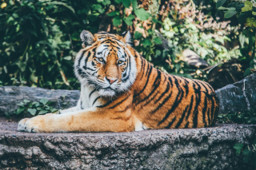
Equivalent top predators in Brazil, like pumas, jaguars, and maned wolves, have had similar effects where protection of habitats and measures to prevent poaching have enabled their numbers to increase. As a keystone species in Argentina’s Iberá Wetlands, jaguars have been crucial in shaping this habitat, by controlling populations of herbivorous species like capybara and marsh deer, as well prompting balance between other predators like foxes and pumas.
In the US’ Yellowstone National Park, gray wolves were wiped out by park employees in 1926. This wrongheaded approach to the park’s management meant that, without predators, elk overgrazed trees, causing songbirds populations to decline and leaving beavers unable to build dams due to the resultant erosion of riverbanks. Water temperatures also rose, impacting cold-water fish. Seventy years later, the reintroduction of just 14 wolves had clear and immediate effects, leading to the reversal of the above damage. Elsewhere, white-tailed eagles – an apex predator reintroduced to Scotland from Norway – have the additional role of cycling nutrients between marine and terrestrial ecosystems.
A 2023 study of large-carnivore reintroductions drew the conclusion that a ‘soft release’ strategy (allowing animals to become familiar with their new environment prior to release), the release of younger individuals – with their “greater behavioural plasticity” – and of wild-born animals, all increase rates of successful reintroduction (ie, survival). However, generally low success rates of mating after reintroduction show that challenges to rewilding continue, and reinforce how imperative it is to protect and maintain habitats and their existing populations.
- ‘A Night with Grey Wolves’
- ‘Lions, Hyenas and Other Wildlife Calling in the Masai Mara’
- ‘Lions Roaring Before Dawn’
- ‘Serengeti Sounds – Lions and Hippos Calling’
- ‘The Griffon Vulture Cliff’
Beavers
It’s not just top-of-the-food-chain predators that create significant and far-reaching ripple effects when reintroduced. Driven extinct in much of Europe by the 16th century, due to being hunted for its fur and meat, the beaver has now started to be returned to England and Scotland, where it has built dams, dug canals, and created dead wood. These actions generate and maintain habitats able to support diverse and abundant ecosystems.
Dams prevent soil eroded from fields from being washed away into sea, as well as improving the quality of downstream water by retaining nutrients, and regulating flooding by decelerating water flow. In fact, beaver’s dams can reduce the effects of flooding by as much as 60%. Creating new wetland habitats and promoting the growth of new plants also has the effect of creating carbon sinks. All of these environmental benefits have taken on increased significance in the light of extreme weather resulting from the climate crisis.
- ‘Beaver and Loons on a Lake – End of Summer Night’
- ‘Beaver Conversation’
- ‘Beavers Working at Otter Creek’
- ‘Early Morning by the Pond with Birds, Frogs and Beavers’


Bovids
There are many examples of the significance that members of this biological family (cloven-hoofed, ruminant mammals that includes cattle, antelopes, and goats and sheep) can have on the environments in which they are present.
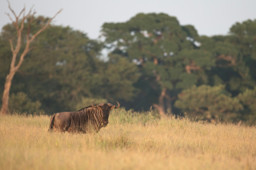
Blue wildebeest, for example, are a keystone species of Tanzania’s Serengeti – a region of riverine forests, swamps, kopjes (isolated rock hills), grasslands, and woodlands. Their grazing reduces the amount of vegetation available to fuel wildfires, decreasing the potential for large-scale burns; the reduction of fire intensity also enables tree growth, aiding the sequestration of carbon. As a result, the wildebeest are vital to the Serengeti’s role as a carbon sink, mitigating climate change.
However, diseases communicated to wildebeest from livestock led to their population being reduced to just 300,000 in the middle of the 20th century – compared to estimates of 1.3–1.5 million individuals in the past (though these figures are now being contested). The wildebeest’s critical role was highlighted by the resulting proliferation of ground vegetation, which had the knock-on effect of wildfires that decimated as much as 80% of the ecosystem each year.
Thankfully, management of disease among the species has allowed their numbers to return to historic levels: “one of the greatest conservation success stories in recent times, […] br[inging] the Serengeti’s landscape back into balance”.
Similarly, Arctic muskox are a key element of the Arctic’s function as a natural carbon sink – though this effect is increasing under threat due to climatic changes. In areas without muskoxen, fast-growing plants grow unimpeded, limiting more diverse species’ ability to thrive. Shrubs are also more likely to grow without muskoxen to control them. Both less efficient at sequestering carbon than the grass-like plants that thrive under grazing, being darker, shrubs also absorb more heat, accelerating permafrost thaw and contributing to climate change.
The European water buffalo is fully extinct – but the similarity of its Asian cousin means that this species is instead being introduced to Eastern Europe; adapted to wet areas, they are important architects of biodiversity and abundance. Seventeen individuals introduced onto an island in the Danube have helped to restore the biodiversity of the Delta ecosystem. By moving through marshes and creating pools and wallows of various sizes, the buffalo create niches for amphibians, fish, and insects, while simultaneously dispersing the seeds of the plants they eat or which become caught in their hair.
In addition, and as with Eurasian bison in Romania, the reintroduction of plains bison to the US Great Plains has been equally consequential. It’s thought that the prairies were once home to as many as 25–60 million plains bison – before this number was reduced by hunters and settler-colonists to just a couple of dozen individuals by the 19th century. However, since 2012, biologists and conservationists have been working to reintroduce this species to its historic range – and the project has been so successful that “their impact on the landscape could be seen from space”.
Project Rewild Zambezi
In Zimbabwe, upwards of 2,500 animals are being relocated to the Zambezi River valley from a southern reserve. Known as Project Rewild Zambezi, this ambitious initiative is attempting to counter climate change-driven drought – which has become more of a threat to local wildlife even than poaching. Having been transported 1,000 km, more than 100 live-captured elephants and almost 200 impala have been relocated, with lions, wild dogs, giraffes, zebras, buffaloes, and wildebeest set to follow.
Floreana
Floreana is one of only a few islands in the equatorial Galápagos archipelago of the Eastern Pacific which possess sources of fresh water. For this reason, it became an important destination for seafarers like whalers and pirates to restock their ships with supplies – including using its native tortoises as a source of fresh meat. However, this human presence resulted in the introduction of invasive animal species including goats, donkeys, cattle, and rats, as well as aggressive invasive plants such as guava and blackberry. The uncontrolled spread of these species meant that the island became ecologically imbalanced, without, for example, giant tortoises to act as ecosystem engineers by distributing seeds and stirring and reworking soil. The resulting trophic cascade has significantly compromised the island’s ecology.
Now, though, by combining community engagement with scientific strategies, the Floreana Ecological Restoration Project is working to reinstate the island’s biodiversity, while also improving the livelihoods of its 150 human residents. Doing so will involve the active restoration of more than 4,942 acres (2,000 hectares) of degraded habitat, removal of invasive species (including feral cats and two species of rodents), and the reintroduction of the native species which they displaced and extirpated (made locally extinct). The Charles Darwin Foundation, which runs the Project, runs a forest nursery on Floreana which collects native seeds, produces thousands of seedlings every year, and raises local community awareness and engagement.
As well as the immediate benefits to Floreana and its populace, the Project’s successes can be replicated across other Galapagoan islands – while also “demonstrat[ing] to the world that large-scale ecosystem restoration is achievable […] for our planet’s future”.
Invertebrates
It’s not only birds and animals which have essential impacts on ecosystems – all types of species have their parts to play. In the UK, the white-faced darter – a rare dragonfly which favors shallow, peaty pools – was reintroduced to North West England’s Delamere Forest. The creation of specific habitat in Rockingham Forest, in the country’s East Midlands, led to an equally successful reintroduction of the chequered skipper butterfly. This species had been extinct in England since the 1970s, as had large blue butterflies, which have also been successfully reintroduced, to limestone grasslands in the South West – in part because of the presence of colonies of red ant colonies, upon which the butterflies’ larvae depend.
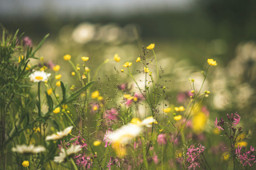
In addition, farmers and other landowners are being encouraged to implement practices that encourage wildflower growth, and initiatives such as the Magnificent Meadows project have seen more than 495 acres (200 hectares) of wildflower meadows restored. As a result, the populations of rare species of butterfly like the chalkhill blue and the Duke of Burgundy have seen commensurate increases.
In conclusion
It is possible for targeted conservation efforts to bring species back from the brink of extinction. However, reintroductions are not a panacea.
Compared to a technique like habitat restoration, rewilding is considered an invasive approach. Indeed, captive breeding and reintroduction programs, in particular, are deemed by the WWF to be a “‘last resort’ strategy reserved for species in such dire situations that they would go extinct without outside assistance”. Captive breeding is also accompanied by issues such as animals imprinting on the humans raising them, leading to the need for costumes or hand-puppets – though this doesn’t remove difficulties brought about by young not being raised by wild parents (such as human-reared animals’ parental inexperience when having their own offspring).
In addition, species being bred in captivity are likely to be endangered, meaning a lack of individuals which can be bred together without creating a lack of genetic diversity, from which genetic diseases may arise, further imperiling the species’ future.
It’s also true that the reintroduction of species that are no longer familiar in a given location can generate controversy – for example, due to fear of predators killing livestock or, in the case of beavers, impacts of their behavior upon fencing and farmland. Yet these effects can be mitigated with compensation schemes.
Therefore, ultimately, the rewilding success stories outlined above show how powerful this strategy can be. The reintroduction of keystone species, in particular, in addition to natural processes being allowed to take place without hindrance, can “support global biodiversity objectives, mitigate climate change, and ensure a healthier planet for all living beings”.
Even from a coldly financial standpoint, reintroductions provide benefits, reaping economic dividends from eco-tourism connected to the presence of formerly absent species, which attract visitors who bring in money and support jobs. More fundamentally, the re-establishment of species and restoration of ecosystems according to their natural status quo means rebuilding a global life-support system and “a sign of hope that we can reverse the decades of harm we’ve done to wildlife”.
Earth.fm is a completely free streaming service of 1000+ nature sounds from around the world, offering natural soundscapes and guided meditations for people who wish to listen to nature, relax, and become more connected. Launched in 2022, Earth.fm is a non-profit and a 1% for the Planet Environmental Partner.
Check out our recordings of nature ambience from sound recordists and artists spanning the globe, our thematic playlists of immersive soundscapes and our Wind Is the Original Radio podcast.
You can join the Earth.fm family by signing up for our newsletter of weekly inspiration for your precious ears, or become a member to enjoy the extra Earth.fm features and goodies and support us on our mission.
Subscription fees contribute to growing our library of authentic nature sounds, research into topics like noise pollution and the connection between nature and mental wellbeing, as well as funding grants that support emerging nature sound recordists from underprivileged communities.

