


What comes to mind when you read the title of this article? Microphones, recorders, wind protection, maybe cables and SD cards. Endless articles promise detailed lists of the best equipment you can get. Images of field recording equipment attract lots of reactions and get massive reach. Equipment reviews are a sure way to get clicks and engagement. I’ve been guilty of some of these strategies too, but it’s becoming very passé.
Regardless where you stand, equipment discussion is a black hole that no other topic survives. That is somewhat understandable. As a beginner, buying more and better equipment is a good way to improve your field recording practice. That quickly takes you into the territory of diminishing returns though. There is a hard ceiling to how much you can spend on microphones and recorders, dictated by either your wallet or the existing kit on the market. This propensity to talk kit goes at the detriment of more important topics though.
Here’s my hot take on this: at the lower end of the price spectrum, field recording equipment will yield relatively similar results. A few dB of self noise won’t make a huge difference if the recordist hasn’t mastered the other tools of the trade, the ones that can’t be bought.
This obsession with equipment is sometimes encouraged by manufacturers who have sensed that the community is very responsive to novelty and hype. My suggestion is to take a step back and approach this from a different angle, before throwing money at the problem.
I have made decent recordings with equipment that was worth a few hundred dollars. Conversely, I’ve captured mediocre audio or downright failed at it using equipment that cost many thousands. The return on investment mindset is shoddy at best, and can be an expensive crutch at worst. Let’s examine some less well known but more important tools that are sure to improve your field recording results.
Listening skills

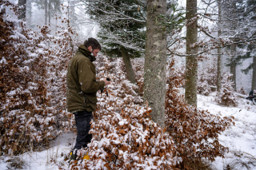
This goes without saying, but you need to listen before you can record. Sadly, I see lots of people overlooking this critical step in their practice. The reasons for that might be too much excitement, tunnel vision on the end product, not enough experience in the field, overconfidence, or trusting the kit to do their work for them.
Whatever the reason, this one is easily fixable. The focus needs to shift from the end result to the experience and the process. Being out in the field is not merely an inconvenience. If you don’t enjoy this part, you might as well find something else to do. Being fully present takes quite a bit of effort. Listening intently for a long time can be exhausting, especially when one is used to endless flows of information and stimuli. Proper immersion into the land- and soundscape seems like a lost art.
When I went to South Africa in 2016 to join Francisco Lopez and a handful of sound artists, one of the things we did was a very nice deep listening exercise. We went out into the bush at sunrise or sunset, brought a bunch of camping chairs and sat down without talking for at least an hour at a time. The first few minutes of that experience were a bit difficult, but the more we did it the easier it got. Slowing down and synchronising with the rhythms of the savannah sounded a bit new agey at first. However, it gave us a whole new perspective into the landscape we were there to understand and document.
You don’t need to go to South Africa or to join others on a field recording expedition to do this. It can be done very easily even in an urban garden or park. The important thing is to treat it as a sort of meditation. Let the sounds flow through you, and try to ignore other thoughts or stimuli.
Fieldcraft/experience
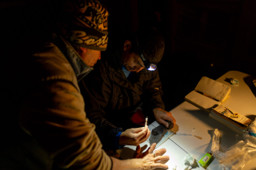
This is a big one. Once you’ve improved your listening skills, it’s time to get out into the field. There is no substitute for doing the thing, which in our case is going out and recording. Completing the cycle of research, plan, go out, record, come back, copy, listen, and learn is essential to your practice as a field recordist. Reading and talking about it can only take you so far. Getting good at field recording requires you to put in the field work for hours, days, weeks, years.
The Japanese concept of Shu Ha Ri applies here perfectly. In short, the three stages of mastery are “follow the rules, break the rules, transcend the rules”. My journey in field recording started by getting familiar with the rules as best as I could. There weren’t that many rules, fortunately, so I went out into the field and started applying what I had learned. When there were no rules to follow, I tried to make them up as best I could.
It took me many years of repeating the cycle I mentioned above before I realised that the rules can be broken. Fortunately field recording is a relatively new practice and there is still a lot to standardise. While too much freedom and too many options can be a problem, in my case this encouraged me to find my own way of doing things. To me, some of the rules that people like to stick to seemed irrelevant or worth breaking.
By going out into the field a lot, I developed a sense for how to do things without necessarily thinking about rules. I am playing it by ear, if you will. This is the third stage in the metaphor above, although I feel like I am just at the beginning of it.
Access

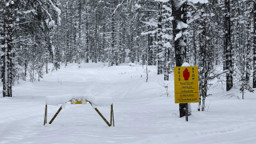
Certainly less profound than Shu Ha Ri, access is quite important nevertheless. These days it’s fairly easy to get a decent recording rig and to point a mic at something interesting.
There are lots of folks sharing field recordings of varying levels of quality everywhere. This creates a sea of noise in which a lot of good material can get lost.
One way to set oneself apart is to get access to interesting sounds that have not been recorded properly (or at all). Rare wildlife, remote environments, new ways of capturing sound have lots of potential. But to capture these you need access.
I’ve had to spend lots of money on recording expeditions in my career. In some cases, it was the only way to reach places like Langoue Bai in Gabon, or to find species like the white rhinoceros. But paying to be somewhere or to track a certain species has its limits. Some of the truly remote places or rare species require a different approach.
Having a solid portfolio can be of great help when approaching organisations. Working with scientists and researchers can open doors to places where simple tourists are not allowed. Offering to train rangers to do sound recording sometimes helps as well. Offering to be an advocate for nature and wildlife can also achieve that. Sometimes just asking nicely and being a great human that people like to hang out with can do more than everything else I mentioned. I’ve done all of the above and more in my quest for access, and it has helped immensely in my practice.
Post production abilities – digital audio
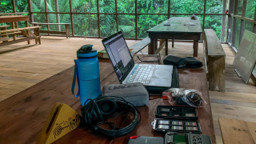
Once you’ve got the listening skills, obtained access, been out in the field and returned with good sounds, it can be a bit of a deflating moment when you need to sit down and figure out how to approach the data. This is where some knowledge of digital audio and post production will come in very handy.
I was messing around with digital audio workstations for more than a decade before I picked up a microphone. Teaching myself to make music and to do sound design in the box offered me an invaluable glimpse into working with sound. I know and understand what other professionals require when they use my field recordings. More importantly, I understand what all the numbers mean and do.
Questions about software, sample rate, bit depth, data management, editing and mastering, fx, signal chain etc. pop up very often on social media and in my inbox. I can sometimes offer a simple answer, but that doesn’t help much. A field recordist needs to understand and master the studio part of their workflow, even if they will pass the material to someone else once they’re done recording.
Curiosity
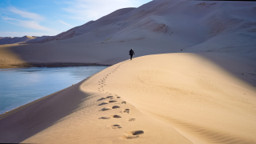
I sometimes ask myself why I love field recording. It’s not an easy question to answer, but a bit of introspection goes a long way. At its core, it’s probably curiosity that makes me want to go to the remotest parts of the world and to immerse myself in the soundscapes and landscapes there. I am perpetually interested in listening to the sounds of our planet and its inhabitants.
Coupled with the desire to share these sounds with others, this curiosity has been my driving force for decades. Wandering, exploration, trial and error are pastimes I thoroughly enjoy. I don’t discount instinct and going with the flow. Referring back to the Ri stage of Shu Ha Ri, I shy away from following recipes or repeating other people’s workflows mindlessly. You can read more about it in my Freestyle field recording manifest.
With this intense curiosity as fuel, I am rarely bored. Even when I am, I allow myself to wallow in that feeling rather than assuaging it by reaching for my phone or by looking for an instant hit of dopamine otherwise. The human brain works great when it’s not overly stimulated. Many interesting ideas need a bit of boredom or autopilot to show up, and being in the field is the perfect setting.
📍 I hope these tools will give you something other than equipment to explore and talk about. There’s nothing wrong with researching kit before you make a purchase, but it’s seriously not worth talking about so much.
🎧 Listen to George Vlad’s recordings on Earth.fm
🖋️ Read George Vlad’s articles on the Earth.fm blog
All photos courtesy of George Vlad
Earth.fm is a completely free streaming service of 1000+ nature sounds from around the world, offering natural soundscapes and guided meditations for people who wish to listen to nature, relax, and become more connected. Launched in 2022, Earth.fm is a non-profit and a 1% for the Planet Environmental Partner.
Check out our recordings of nature ambience from sound recordists and artists spanning the globe, our thematic playlists of immersive soundscapes and our Wind Is the Original Radio podcast.
You can join the Earth.fm family by signing up for our newsletter of weekly inspiration for your precious ears, or become a member to enjoy the extra Earth.fm features and goodies and support us on our mission.
Subscription fees contribute to growing our library of authentic nature sounds, research into topics like noise pollution and the connection between nature and mental wellbeing, as well as funding grants that support emerging nature sound recordists from underprivileged communities.