


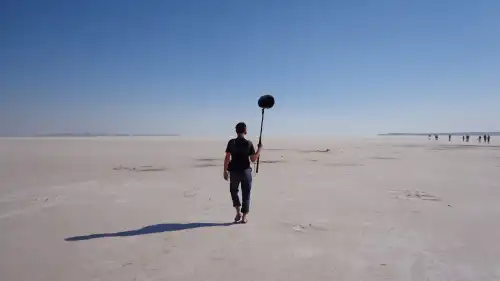
Félix Blume: On sharing sounds, myths, and playing with darkness
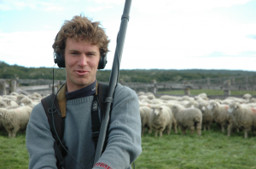
Félix Blume is a well-known French sound artist/engineer who uses sound as a basic material in audio pieces, videos, actions, and installations. His practice involves an extended understanding of listening: a way to encourage awareness of the imperceptible, and as an act of encounter with others. His work incorporates recordings of different species, from the buzzing of a bee to the steps of a tortoise or the chirp of a cricket, as well as human dialogues with both natural and urban contexts. He is also interested in myths and their contemporary interpretation, and in what voices can tell us beyond words.
Earth.fm’s Melissa Pons caught up with Félix for an interview covering his journey from sound engineering to field recording, the community aspect of sharing recordings online, the relationship between the sound of a place and its inhabitants, the responsibility of a field recordist, the importance of providing context for recordings, contemplative engagement with the environment – and more.
Below is a taster where the two discuss sharing sounds, and the inspiration and processes behind two of Félix’s most celebrated sound pieces.



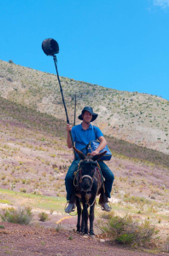
You studied music for a long time and then started to perceive sounds as something that conveys emotions and sensations – right?
I write sounds through music. That’s right. I studied music before I was 18, and then decided to continue working in the field of music, but in the sonic part. At the beginning, I wanted to work mostly on sound reinforcement for concerts and shows. It was mainly technical, so I decided to keep working in the sound field, on sound recording, and then slowly began to work for documentaries, which was a way to travel to places I wouldn’t have been able to go otherwise.
Without the need to share or to listen, maybe there would be no need to make a recording. I think my work is about this necessity of sharing.
And so, slowly, I got to field-recording natural environments. Where I stop doing music by myself, I start recording sound; I like that the sound takes the place of the music. It’s a kind of continuity. Or maybe there is no clear barrier between what we call music and what we call sounds.
You don’t just record a natural environment; your work also contemplates the voices of the people in those places. I assume that you’re not looking for answers, you just help to reveal beliefs or myths that are inspired by the surroundings.
It’s an ongoing process; nothing is planned when I start working with sounds. It was mostly a job, as a sound recordist for films or other material. The starting point was sharing songs on a platform called Freesound. After my first recording, in 2005, I was in Mali with two school friends to do a small documentary. I was in charge of the sound recording, and after two months shooting, I started sharing the sounds on Freesound and then other platforms such as SoundCloud.
And I discovered that I wasn’t the only one who enjoys recording songs, that there is a community of people. And, thanks to the internet, there is a way to listen to recordings from around the world, by people who enjoy recording and listening. That’s how I discovered that field recording existed – first, through the recordings of Chris Watson, and then other sound artists. So, this cycle of sharing was, for me, the starting point – and it’s maybe a condition of doing anything with sound, and always listening: the need to share something.
Without the need to share or to listen, maybe there would be no need to make a recording. I think my work is about this necessity of sharing – which was the starting point, but is still present. I like that I’m not the owner of the sound I’m recording – which is maybe clearest if I recorded a singer. I’m clearly not the owner of the singer or the song, which has been written by somebody else; I’m just making the recording, but somebody else would be able to listen to this singer thanks to the recording. I’m a bridge between the song and the listener. And I can apply this to a bird, a place, the wind – or anything producing sound. I feel responsible, being this vehicle between places and listeners.

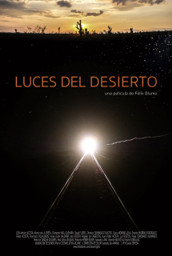
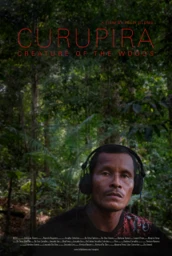
Those places are full of people, so a few ones with voices, or saying things through beings which are not human, or through trees or the wind – anything which produces sound, even the acoustics of the place itself. With my films Luces del Desierto and Curupira, Bicho do Mato, I felt the same responsibility of being a vehicle between the people living in a territory and listeners of their stories. Of course, I choose what I put into videos or sound pieces – I don’t totally disappear. There is a way of recording, editing, and showing the listener, but I try to be more of a vehicle than an author.
I’m also very interested in the relationship between places and their inhabitants – human or not. And ways to listen to that as a dialogue. I like to listen to it as a dialogue between the sounds of the place and of its people, which, depending on the piece, may be more or less present.
What is your process when bringing myths to a sound? In these examples, it is a documentary form which also includes images.
I think the myths and the sounds are generally invisible. In the case of Curupira, it’s sounds from the forest. In the Amazonian rainforest, you can’t see much because of the trees, but you’re constantly listening to the sounds of insects, birds, monkeys, and other animals. So I think it’s a proper place to listen to sound and then to imagine.
If you can’t see, you imagine. Listen to a voice and you might imagine somebody very tall or very fat. Or you may imagine the location around them: the middle of the jungle or a flat in Belo Horizonte or the Portuguese countryside. You imagine in a way similar to when you’re reading a book. But once you show something, there’s less space for interpretation. I think that’s what happens with myths, too. When you’re listening to a sound in the Amazon rainforest, you can’t see its origin, so you can imagine it’s a creature; you give the sound an explanation, and then it becomes a story or a myth. And that’s what happens with sounds, and that’s what happens with the myths, I think.
In the second case, in Mexico, they’re talking about lights. They can’t see the lights, but they appear during the night – when you can’t see, or you’re not sure of what you’re seeing or what you’re imagining. I really like that, and it’s really present in myths, too, and gives an importance to imagination. So myths and sounds share this invisibility, which may enable the listener’s imagination and interpretation.
Are you afraid of the dark?
I’m not afraid of the dark. I guess I was, as a child, like most children. Because you can’t see, darkness is a place of everything, because anything could be there. A place for everything, or a place for nothing. I like it.
During the night the listening experience is much more important because most information is coming through the ears. We are a very visual society – but just by closing your eyes, or when you’re in a place where you can’t see, then you listen more and that’s interesting for anybody, not only those who specialise in sound.
In Luces del Desierto, I wanted to play with this darkness – because, in the earlier Curupira, there are a lot of moments where the screen is black and we listen to somebody with just subtitles on the screen. Once, when I showed the film in Prague, one of the questions was, ‘Did you really make all the voice recordings in the obscurity?’ So, suddenly, it wasn’t the black of the screen, it was the black of the night. In Luces del Desierto, I wanted to play with this – though the screen is never actually black: there’s always a little light and your imagination interprets the image.

When you’re in a cinema, and the screen is black, suddenly you are inside a black room. Orson Welles said that, when you’re on the radio, you’re on a 360 degree screen because you are inside the sound. Whereas, when you’re watching a film, the screen is just in front of you. So I like to play with this sensation that you are not in front of the screen, but you are inside it or are inside the sound you’re listening to.
📍 Listen to the full audio interview
📍 Visit Earth.fm profile
📍 Visit website
This interview has been edited for length and clarity.
All photos courtesy of Félix Blume
Earth.fm is a completely free streaming service of 1000+ nature sounds from around the world, offering natural soundscapes and guided meditations for people who wish to listen to nature, relax, and become more connected. Launched in 2022, Earth.fm is a non-profit and a 1% for the Planet Environmental Partner.
Check out our recordings of nature ambience from sound recordists and artists spanning the globe, our thematic playlists of immersive soundscapes and our Wind Is the Original Radio podcast.
You can join the Earth.fm family by signing up for our newsletter of weekly inspiration for your precious ears, or become a member to enjoy the extra Earth.fm features and goodies and support us on our mission.
Subscription fees contribute to growing our library of authentic nature sounds, research into topics like noise pollution and the connection between nature and mental wellbeing, as well as funding grants that support emerging nature sound recordists from underprivileged communities.