


Ancient landscapes, modernization and identity: A conversation with Luís Antero
Prolific field recordist Luís Antero lives in the highest mountainous region of Portugal, where he also produces much of his field recording work. His recordings tell the listener that there is no separation between nature and humans, but that our relationship with the more-than-human can transform over time.
Luís’ work is preoccupied with ancient landscapes transformed by infrastructural change, and by modernization that supersedes traditions and professions directly related to nature. There, in time spent interacting with the people of a given place, lies an identity of a place with its traditions that hopefully won’t totally fade when they get preserved in a sound format – and mostly when more people listen to it.
What can we expect from recording and sharing soundscapes of regions, ways of life, and natural landscapes that are at risk of disappearing?
Firstly, we can expect them to be recorded and stored for future reference, contributing to a deeper and more multidisciplinary understanding of these territories.
We can also expect that art – in this case, sound art – will allow us to reflect on the territory and the (inter-) relationships we have with it, and with all the living beings that inhabit it; art as a means of promoting encounter and mutual respect.
Why sound?
When I started in 2008, everyone was working with images (photography and video) – perhaps because the area I call home, Beira Serra, between the Estrela and Açor mountains, has always been very green, appealing to contemplation and visual culture. But, coming from music as a basis for my work, and having opened my ears to a lot of experimental music, I started to listen to this territory more than I saw it; that’s why I dedicated myself to field sound recordings. Sound points to more paths than images; it lets you ‘see’ more, it communicates more, it keeps more inside ourselves.
Listening, rather than hearing, puts you at the center of the landscape and in close communion with it. The landscape also ‘perceives’ this and is usually generous. Recording comes later, from the perception of listening.
How and with whom do you share recorded sound?
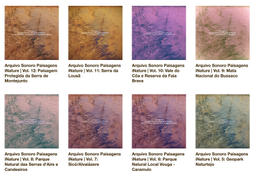
I share my sound works on my Bandcamp page for anyone interested, with free and unlimited listening. Downloading is only allowed for collective projects – that is, those that are not solely mine, because they were made with a community, municipality, or institution.
Above all, I am interested in public access to my work and its promotion (and I’m not even good at promoting), so that more people can listen to my recordings – which, after all, once edited, belong to everyone.

How important is to record and listen locally?
Listening has an extraordinary effect of belonging. Listening, rather than hearing, puts you at the center of the landscape and in close communion with it. The landscape also ‘perceives’ this and is usually generous. Recording comes later, from the perception of listening. Recording so that moment is not lost, so that others can also listen to it, to generate that sense of belonging.
What reactions do you get when you share your work with local people?
Positive ones, almost always. They appreciate the fact that I record sounds that may be disappearing, and archive and share them. Sometimes they don’t understand the acoustic dimension of certain recordings (‘What’s the point of recording the sound of river water for 30 minutes?’, for example), or the artistic dimension I bring to the project – but that doesn’t prevent them from understanding and, above all, respecting the essence of my work.
How do you approach recording in a place where people don’t know you? How do you arouse their curiosity and make them feel comfortable with or interested in the work you are doing?
Here, in the area I call home, Beira Serra, I know many of the places where I record well, so my approach in the field is the same as when I record in my village, naturally.
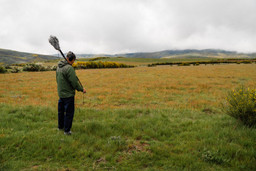
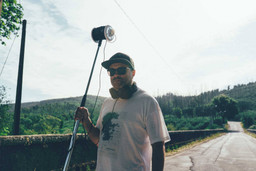
My father used to serve at weddings and baptisms in the villages of the Açor mountains, and I often went with him to carry the equipment, so there are still people who remember me, even though I was younger at the time. That helps: saying who my father is, where I come from – people feel more at ease. Then, the fact that I only carry sound-recording equipment helps a lot. A sound recorder is not a video camera, and people – especially those who live in the most remote mountain villages – feel more protected and react more positively because they know I’m not going to film them, just record them.

Has any project had a particular impact on you, and why?
Hmm, that’s a difficult question… Actually, all projects are important to me. I put passion into all of them. I’m equally interested in producing long sound archives as conceptual pieces about a particular place. All places are sonic and therefore deserve attention.
What else would you like to do in this area?
There is so much to do, actually, but I am in no rush.
Industrial sound archives, mainly from family businesses, are on my list of projects to carry out. The soundscapes of factories, which provide so much work for so many good people, are something that have always fascinated me.
What does it mean to record in the place where you were born and spent most of your life?
It means having this place as my home and leaving a legacy to my children and to all those who are interested in these heritage matters.
“Most shepherds, for example, have absolutely unique life stories. A life so difficult, full of work, sometimes with harrowing moments, should be recorded for future generations, as an example for those that succeed us. There are biographies on famous political and cultural personalities, so why not do it with anonymous people too?” This particular thought (from a previous interview with Luís Antero) made me think about how the more influential narratives, or official narratives, if you will, end up relegating the experiences of these anonymous people to a secondary level, sometimes falling into exoticism. If more of us listened to and preserved these stories, would we live in a different world, with priorities more focused on our well-being and our relationship with other living beings?
Without a doubt. Recording here is exactly that: recording those who never thought they would be recorded – or recording those who should be recorded.
As I know the territory well, I know where the people I want to record are: either in the pasture with the sheep, in the fields working the land, in the café socializing, in the forest caring for it, or in the river fishing, etc…
All these people have something to tell; they carry within them years and years of heritage, know-how, oral tradition, history, and stories. Clearly, life should be centered on them – on all those who know the territory and who can make very important contributions to its development. At the moment, there is a greater awareness of this, mainly due to forest fires, and because artists and civil society groups see regions’ inhabitants as an active and central voice in solving problems.

All photos courtesy of Luís Antero
Earth.fm is a completely free streaming service of 1000+ nature sounds from around the world, offering natural soundscapes and guided meditations for people who wish to listen to nature, relax, and become more connected. Launched in 2022, Earth.fm is a non-profit and a 1% for the Planet Environmental Partner.
Check out our recordings of nature ambience from sound recordists and artists spanning the globe, our thematic playlists of immersive soundscapes and our Wind Is the Original Radio podcast.
You can join the Earth.fm family by signing up for our newsletter of weekly inspiration for your precious ears, or become a member to enjoy the extra Earth.fm features and goodies and support us on our mission.
Subscription fees contribute to growing our library of authentic nature sounds, research into topics like noise pollution and the connection between nature and mental wellbeing, as well as funding grants that support emerging nature sound recordists from underprivileged communities.