


It may seem that we are constantly inundated with articles that connect responses to climate change with social justice – but much of their analysis is simplistic and doesn’t reckon with the colonial dimension of the topic. Fortunately, current scholarship is increasingly addressing the inextricable connections between climate, science, and European imperialism, so, here, we will investigate the phenomenon of climate colonialism.
What is colonialism itself?
The Stanford Encyclopedia of Philosophy defines colonialism as “a practice of domination, which involves the subjugation of one people to another”. More specifically, the term refers to “domination […] by a foreign state or nation […] extending and maintaining […] political and economic control over another people or area”, typically via state power. Exerting control in this way “generally involves […] violence and [the] killing, displacing, and/or marginalizing [of] the existing population”. More succinctly, Oxfam describes colonialism as amounting “not only a history of brutal wealth extraction but also a powerful force behind today’s extreme levels of inequality”.
Colonialism occurred during the empires of classical antiquity. Subsequently, two main waves saw European countries colonize the Americas (from the 1400s on) and, in the late 1800s, the majority of the African continent invaded, conquered, and colonized by just seven Western European powers: the so-called Scramble for Africa. This scramble was enabled by the Second Industrial Revolution, which saw developments such as rail transport and telegraphy drive unparalleled movements of both people and ideas.
The dark side of these technological developments mirrors broader patterns within colonialism, where the extractive practises it is responsible for “have driven wealth in the Global North, and poverty in the Global South”.
At the beginning of this colonial project, there was relatively “little inequality and [only] small differences between poor and rich countries (perhaps a factor of four)”. Today, the difference between the richest and poorest countries has ballooned to “a factor of more than 40”. Colonialism, then, has been a major driver of “the grotesque inequality of our rigged economic system – a system deliberately designed to enrich a wealthy elite, at the expense of ordinary people”.
The division between the richest 1% and the rest of the world has become unprecedentedly vast. In 2024 alone, “billionaire wealth skyrocketed, increasing three times faster than” in the previous year. (By contrast, “the actual number of people living on less than $6.85 a day has barely changed since 1990”.) But, of those who became billionaires in 2024, more did so by inheriting their wealth than by earning it: “most wealth is taken, not made”. A report published earlier this year by Oxfam, Takers Not Makers: The Unjust Poverty and Unearned Wealth of Colonialism, found that “60% of billionaire wealth is either from crony or corrupt sources, monopoly power, or is inherited”.
This model “perpetuat[es] inequality[,] […] [with] [c]ronyism and corruption allow[ing] the super-rich to ensure government works for them”. What’s more, it entrenches a status quo that came about through the first main wave of colonialism. Not only were Global Northern countries the beneficiaries of colonialism, it was the richest in those countries who benefitted most. As such, “empire coincided with huge inequality in [the] colonising powers [themselves]”. For example, in the heyday of the British Empire, “the richest 10% extracted 50% of all income in the UK”.
The Transatlantic slave trade “was crucial to the building of [the] economies of European colonies”. The millions kidnapped as part of this system were violently dehumanized: made to endure forced marches, the inhumane conditions of the ‘Middle Passage’ voyage, brutal labor on plantations under conditions of constant cruelty, separation from family, and the denial of basic human rights.
During the more than 300 years throughout which this trade in human beings was active, anything from two million to 60 million people died.
And this trade in human beings continues to materially affect the contemporary world. For example: after the abolition of slavery, and after Haiti gained its independence from France, it “was forced to borrow to reimburse slave owners 150 million francs – the equivalent of $21 billion”. This “cycle of debt and disaster […] continues to date”, with lower-income countries spending, on average, almost half of their national budgets on the repayment of debt to richer countries – much more than they are able to invest in education and healthcare.
Climate colonialism
Acknowledging the above conditions is crucial to understanding climate colonialism as another expression of “their legacies [being] alive in the present”.
By “establish[ing] […] a global extractive economy, which today still sees raw materials […] from the global South plundered for profits realised largely in the global North”, colonialism also created a framework within which the environments of the Global South are polluted with the North’s waste.


Not only this, but the Global North bears the responsibility for upwards of 92% of carbon emissions, and, by extension, for the present climate crisis. However, it is the Global South which is disproportionately disrupted by occurrences such as extreme weather; in 2021, this was found to be the case in relation to the “impacts of weather-related loss events (storms, floods, heat waves, etc.) including human impacts and direct economic losses”. (Burma/Myanmar, Haiti, Mozambique, and Zimbabwe face among the most extreme such events.) Last year, 22 million people in the Horn of Africa were made “acutely food insecure” by famine arising from a historic drought, while “sea-level rise is a direct security threat” to small island nations.
These damaging impacts upon colonised peoples and environments also applies to Indigenous groups living in the Global North. Existing in equivalently marginalized states, akin to “pocket[s] of the Global South”, they also do not receive any benefit from the resources extracted from their land. Indigenous Ainu people in Japan, for example, had their land annexed, resources taken over, and were only formally recognised on Hokkaido island – their most populous historic homeland – in 2008. “[Japanese] settlers also broke sustainable practices of indigenous people with their land” and exhausted resources such as “the herring industry […] [traditionally] central to Ainu lifeways”. And now, the Japanese government “proposes to store [the country]’s toxic nuclear waste in Ainu (ancestral) land”.
Even more fundamentally, the Global North’s colonial project has been “deeply related to climate from its very onset”, with “climatic variability […] [used as] justif[ication of] […] colonial practices”, with populations “living in warmer climates [seen] as ‘exotic’ and ‘other’”.
In fact, even the data upon which meteorology is founded was the product of colonial powers, with information sourced from 19th century English ships’ “logbooks […] [having been] recorded […] to better connect [colonized] territories […] and speed up the exploitation of other people’s land and water”.
It is for reasons such as these that environmental and climate justice leader Elizabeth Yeampierre has described “climate change [as] the legacy of extraction, of colonialism, of slavery”.
Forms of climate colonialism:
Climate reparations
In this form, climate colonialism can be understood as “the exploitation of resources of the Global South by Global North nations for their green agendas”. This is exemplified by rich countries’ demand for ‘critical minerals’ like cobalt, which are crucial for smartphones and electric vehicles. Cobalt extraction from the Democratic Republic of Congo, for example, has been associated with “human rights abuses, corruption, [and] environmental destruction” – as well as “the death and injury” of children working as labourers in mines (for which Apple, Google, Dell, Microsoft, and Tesla were sued in 2019).
However, climate colonialism can also manifest in less direct ways. One such form of climate colonialism is tied to climate reparations.
At last year’s edition of COP, the annual Conference of the Parties – created by the United Nations Framework Convention on Climate Change to implement the commitments adopted by its 198 ratifying countries – rich countries agreed to increase their contributions to help poor countries deal with climate change. Part of a payment plan first agreed at COP in 2009, the $300 billion pledged to be received by 2035 has been described as a step “in the right direction”, but “a disappointingly small [one]”.
A prior commitment, made by Global Northern countries at COP15, to “mobilis[e] USD 100 billion per year by 2020 for climate action in developing countries”, was only delivered two years later than planned. In addition, Oxfam sounded a note of caution about “funding [coming] in the form of loans, not grants”, meaning that these ‘reparations’ would cause further debt to be accrued by Global Southern countries, making them a “cause for concern, not celebration”.
Development projects and carbon offsetting
Colonialism is fundamentally underpinned by exploitation of other countries’ natural resources. This second form of climate colonialism is no less exploitative, but insidiously validated by a façade of greenwashing. Under the guise of “‘development projects’ and ‘carbon offsetting’” – schemes which are most detrimental to Black, Indigenous, and people-of-colour (BIPOC) populations – “western countries and companies […] pollute as normal”.
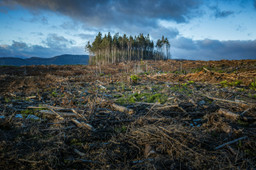
This can apply to afforestation and reforestation carried out under the auspices of the Global North, with projects of this type “hav[ing] […] involve[d] human rights abuses, land grabs, and violence in parts of Africa, Latin America, and Indonesia”. This includes “so-called ‘green police’ shoot[ing] people who enter the forests they had lived in for generations”.

Elsewhere, Norway, second-largest natural gas supplier in Europe after Russia, is one of several Nordic and Baltic countries which have “lobb[ied] the World Bank to stop all financing of natural gas projects in Africa and elsewhere”, in order to preserve their profits.
Twenty countries at COP26 also “pledg[ed] to stop all funding for overseas fossil fuel projects”. They instead suggested that some of the poorest countries on Earth take up green energy technologies, despite this not being at all affordable. Obliging them to remain dependent upon the Global North (via development aid reframed as climate-related transfers) not only “stands to forestall Africa’s attempts to rise out of poverty”. Denying these countries’ ability to produce their own natural gas – a more affordable option than current green energy systems, and the cleanest fossil fuel – also denies the women and children who predominantly carry out household chores the opportunity to use bottled gas for cooking. Instead, they must continue to be exposed to the toxic smoke from wood, coal, charcoal, and animal dung burnt indoors as fuel. This soft colonialism therefore perpetuates the approximate 3.8 million premature deaths caused each year by indoor air pollution of this kind.
With these “neocolonial [and] false climate solutions”, the Global North is “betting on achieving [its] climate ambitions without the need for harder-edged policies at home”; a “pursui[t of] climate ambitions on the backs of the poorest people in the world [which] is not just hypocritical […] [but] immoral, unjust, and green colonialism at its worst”.
Where do we go from here?
It was only as recently as 2022 that the Intergovernmental Panel on Climate Change (IPCC) – a United Nations body which “provide[s] governments […] with scientific information that they can use to develop climate policies” – first referred to colonialism in one of its reports on the impacts of global warming. (Not unrelatedly, where earlier reports received criticism for not including Indigenous or non-Western authors, 44% of the authors in 2022 came from “developing countries and countries with economies in transition”, as well as representing a greater diversity of disciplines.)
The IPCC’s acknowledgment “that historic and ongoing forms of colonialism have directly exacerbated the vulnerability of specific people and places to the effects of climate change” was a significant one. However, its recency makes clear how far we still have to come to tackle the overlap between colonialism and climate change.
Sitting at the intersection of factors including “imperialism, capitalism, international development, and geopolitics” makes this topic particularly complex. This is compounded by the perpetuation of coloniality via “neoliberalism, racial capitalism, development interventions, education, training, and the media”. As a result, finding ways to address “the extremely uneven and inequitable impacts of climate change” is similarly complex.
However: it is notable that – as well as being “vital to, and active in, the many ecosystems that inhabit their lands and territories” – Indigenous communities at the sharp end of colonial policies are often able to “interpret and react to the impacts of climate change in creative ways”. A UN report gives as examples Bangladeshi villagers protecting their livelihoods by growing vegetables in gardens which float during times of flood; Vietnamese communities planting mangroves as protection against tropical-storm waves; and Native American groups seeking to “make tribal lands an important resource for [renewable] energy”.
In contrast, when Indigenous people have not been allowed to carry out their ancestral land stewardship, the effects can be devastating. For example, research shows that Australian bushfires – like the “catastrophic” examples of 2019–20 – are being “amplified by the colonial displacement of Indigenous people from their lands”, which in turn means that the benefits of management techniques like controlled burning are no longer allowed to occur.
This is borne out by research on the “direct links between dispossessing Indigenous people of their land and environmental damage”, such as that by Native American Potawatomi philosopher and climate/environmental justice scholar Kyle Whyte.
Therefore, to constructively oppose climate change requires a “reckon[ing] with the colonial histories that have produced it”. The inclusion of Indigenous groups impacted by climate change, as a result of climate colonialism, is crucial to doing so, and “to enacting [fair] environmental policies”; these groups, “and the teachings of the land they carry, must be centered in decision making”.
Further reading
- Confronting Injustice: Racism and the Environmental Emergency
- ‘More than a Metaphor: ‘Climate Colonialism’ in Perspective’
Featured photo by Mike Erskine on Unsplash
Earth.fm is a completely free streaming service of 1000+ nature sounds from around the world, offering natural soundscapes and guided meditations for people who wish to listen to nature, relax, and become more connected. Launched in 2022, Earth.fm is a non-profit and a 1% for the Planet Environmental Partner.
Check out our recordings of nature ambience from sound recordists and artists spanning the globe, our thematic playlists of immersive soundscapes and our Wind Is the Original Radio podcast.
You can join the Earth.fm family by signing up for our newsletter of weekly inspiration for your precious ears, or become a member to enjoy the extra Earth.fm features and goodies and support us on our mission.
Subscription fees contribute to growing our library of authentic nature sounds, research into topics like noise pollution and the connection between nature and mental wellbeing, as well as funding grants that support emerging nature sound recordists from underprivileged communities.

