


What are the environmental impacts of Israel’s occupation of the Palestinian Territories and the war in Gaza?
Even if the Gaza ceasefire holds, the precarious peace will not expunge two years of Israeli actions which, according to many organizations and experts in genocide law and international studies, meet the legal threshold of genocide. This includes a UN Commission which concluded that Israel’s pattern of conduct, “including imposing starvation and inhumane conditions of life for Palestinians in Gaza”, not only constitutes genocide, but represents the “highest echelons” of the Israeli authorities’ “clear […] intent to destroy the Palestinians in Gaza”.
Two hundred and fifty-one people were abducted during Hamas’ October 7 2023 attack on Israel, and around 1,195 killed: predominantly civilians, and including 38 children. Hamas attack was an atrocity, yet the stark and fundamental power imbalance between Israel and Palestine, which manifests as a “structurally asymmetric conflict”, has resulted, at the time of writing, in the deaths of at least 68,229 Palestinians during the Gaza war: 57 times the number of Israeli fatalities on October 7. This includes 463 deaths by starvation, as a result of the famine engineered by Israel’s deliberate blockade of humanitarian aid; at least 157 were children.
The use of famine as a weapon of war is a war crime. (See more key figures from the war here.)
Environmental impacts
As outlined in our article ‘The Environmental Cost of War’, warfare can have many and varied repercussions on the natural world – most of which go unnoticed and unreported. Here, we will explore this dimension of the Gaza war and Israel’s illegal occupation of the Palestinian Territories.
• Illegal Israeli settlements
Israel has militarily occupied the West Bank since seizing the Palestinian territories from Egypt and Jordan during the Six-Day War, in 1967: “the longest belligerent occupation in the modern world”.
Settling this occupied land contravens Article 49 of the Geneva Conventions, legal standards for humanitarian treatment in war which make Israel’s settlements in the Occupied Palestinian Territories a “flagrant violation of international law”. Yet the Israeli state “offers a slew of benefits and incentives to settlers and settlements”; in 2012, “every Israeli settler family in the Jordan Valley [wa]s given, in addition to an unlimited water supply, a free house, US$20,000, 70 dunnams (km²) of land, free health care and a 75% discount on electricity, utilities and transportation”.
Systemic violence committed by Israelis from illegal settlements, primarily in the West Bank, has been recorded since the early 1980s. From the turn of the millennium, that violence has steadily increased: a war that is “quieter” than that in Gaza, but which is nevertheless escalating due to “a confluence of ideological fervor, opportunism and far-right Israelis’ political vision for the region”.
In 2023, Israeli forces and settlers undertook “12,161 attacks against Palestinians and their properties, including 3,808 against properties and religious sites, 707 against lands and natural resources, and 7,646 against individuals”. Consequences included damage inflicted on approximately 21,700 trees (nearly 19,000 of which were olive trees).
Military and settler violence has caused the deaths of upwards of 1,000 Palestinians in the West Bank since October 7, 2023.
Moreover, Palestinian police “are barred from responding to settler violence”.
• Environmental harm caused by settlers
Within this extreme colonial violence, where “all lives are precarious—people, flora, fauna—and [even] the air, water, and land”, it is unsurprising that “a litany of […] land degradation [has also been] caused by Israeli settlers on Palestinian land”.
Researcher Dror Etkes, who has “ke[pt] close tabs on the expanding Jewish settlements” for more than 20 years, states that this includes “settlers […] dumping trash [and] spoil”, and allowing wastewater to flow directly onto the land. In the words of Yousef Abu Safieh, the Palestinian Authority’s environment minister, “Israel not only exploits Palestine’s resources, it also pollutes and destroys them.”
A report published by the Norwegian Refugee Council, primarily assessing the effect of Israeli settlements’ wastewater discharge, updated in 2024, lists other harms caused by Israel illegal settlements in the West Bank.
The degradation of Palestinian land – which demonstrates Israel’s disregard of the Geneva Convention’s stipulation that, as occupier, it should act as custodian of them – stands in stark contrast to the “great care [that the Israeli government takes] to guarantee that its citizens enjoy the benefits of a clean and comfortable environment”. This inequality is felt by neighbouring Palestinian communities in the form of health concerns; contamination of agricultural lands, with deleterious effects on crop viability and marketability; and ecosystem disruption, including the introduction of invasive species.
In addition, “Israel covertly transports waste products from its own country into dumps and quarries throughout the occupied West Bank […] – deliberately poison[ing] the water, land and livestock of nearby Palestinian villages.”
Solid waste from Israeli settlements – which produce considerably more per capita than those of the Palestinians – is also “contribut[ing] to [a] strain on West Bank solid waste management capabilities”. Reliance upon the burning of waste releases toxic gases, among other environmental problems. In addition, “hundreds of thousands of tons of hazardous waste” dumped in the West Bank by Israeli chemical and military industries “constitute severe […] health and safety hazards to nearby Palestinian cities and communities”.
Also, as of 2018, seven industrial zones and 200 factories had been moved from Israel to the West Bank, or built there, taking advantage of cheaper labor, and more lenient environmental regulations, where “it applies less rigorous regulatory standards […] than […] inside its own territory” – an “abus[e] [of Israel’s] status as an occupying power”.
Certain factories were specifically transferred to the West Bank “due to [their] carcinogenic chemical emissions”. This includes the Dixon Gas industrial factory, solid waste from which “is burned in [the] open air”. Israel also disposes of its hazardous waste in more than 50 locations across the Occupied Palestinian Territory, causing concomitant increases of “a number of mysterious diseases and cancers”.
• Wastewater discharge
Wastewater is the most severe problem facing the Palestinian water sector after water scarcity, which is itself “used by Israel as a tool of oppression”. After occupying the Palestinian Territories in 1967, Israeli military authorities have since remained in control of “all water resources and water-related infrastructure”, and “continues to control and restrict Palestinian access to water […] to a level which neither meets their needs nor constitutes a fair distribution of shared water resources”. This constitutes “an instance of environmental racism at its worst”.
In 2018, it was established that, of all wastewater discharged by Israeli settlements – which amounted to around 131 million cubic feet (40 million cubic meters) per year – 90% was not only discharged onto Palestinian lands, but without any form of treatment.
Settlements are most often located on high ground, “for reasons including surveillance and territorial dominance”, meaning that “lower-lying Palestinian communities, their agricultural lands and natural water systems” are particularly at risk from these discharges. More than “2 million cubic metres [6.6 million cubic feet] of raw [untreated] sewage flow[s] into the valleys of streams of the West Bank…[causing] severe damage […] [and] the contamination of mountain groundwater”.
In addition, “waste products, generated from the production of aluminium, leather tanning, textile dyeing, batteries, fiberglass, plastics and other chemicals [in Israel’s industrial facilities in the West Bank], [are allowed to] flow freely down to Palestinian villages in surrounding valleys”. Industrial wastewater has been found to contain “a high concentration of chemical materials [which] leach […] into the soil and groundwater resources”.
Water sources to which Palestinians are allowed access to are primarily surface and groundwater sources, with “the most important sources [being] rain, runoff, groundwater, and springs”. Therefore, pollution from wastewater “aggravates the chronic drinking-water shortage in Palestinian communities in the West Bank”, and, in 2001, the Palestinian Ministry of Health connected contamination from wastewater with “frequent outbreaks of intestinal diseases in the West Bank”. However, because settlers use Israel’s water-supply system, they remain unaffected by the consequences of their own wastewater.
In addition:
- Over-pumping of underground aquifers, all of which are “monopolised by Israel”, has caused the intrusion of undrinkable saline water into the groundwater table
- The average flow of the Jordan River, “an international river basin unilaterally monopolised by Israel”, has been reduced from 4,101 million cubic feet [1,250 million cubic meters] per year in 1953 to 499-666 mcf [152-203 mcm] due to the effect of two huge reservoirs. It was also deemed unsafe for Christian baptism in 2010, due to its pollution by Israeli settlements and industry run-off
- The Dead Sea – also subject to pollution – “is dying”, its level dropping by almost four feet [1.2 m] every year. Having shrunk into two separate sections, its banks are collapsing, and sinkholes are opening up, all as a result of “the freshwater sources that feed [it] [being diverted] for drinking water and irrigation”, while “its salts are pumped by Israeli companies to flood the global market with exotic cosmetic products”
- Dozens of springs located on private Palestinian land, used for irrigation and watering livestock, have been seized by settlers and “turned […] into tourist attractions and swimming pools”.
Israel’s growing population and rising standard of living means that it is confronted by both severe water shortages and “persistent contamination of the existing water thanks to rampant ‘development’ and industrialization”. The country carried out expensive cloud-seeding experiments for seven years, and is considered a world leader in desalination and water recycling – yet continues to “destroy […] the rain-water cisterns and wells of agrarian Palestinian villages”.
• Destruction of olive trees
Chief among environmental impacts, in the case of Israel–Palestine, is a long history of both Israeli settlers and the military purposefully “hack[ing] to pieces”, “spraying […] with toxic gases”, and “uproot[ing] olive trees […] as part of the[ir] country’s efforts to seize Palestinian land and forcibly displace residents”. Three million trees (including olive, but also citruses) were torn up between 2000 and 2012. Three thousand, one hundred olive trees were destroyed by Israeli settlers in the occupied West Bank during the 2024 harvest alone. “Practically no […] complaints filed” in relation to attacks on West Bank Palestinians’ trees have led to an indictment.
In August this year, 3,000 more, in a village near Ramallah, also in the West Bank, were destroyed by the military, which claimed they posed a “security threat” to an Israeli settlement road. In the same month, 10,000 trees, some of which were 100 years old, were bulldozed by the Israeli army, explicitly in order to make a village “pay a heavy price” after “reports that an Israeli settler had been attacked near[by]”.
Olive trees – a “maltreated symbol in [an] occupied land” – are highly significant to the Palestinian people, both symbolically and economically: they are mostly indigenous, long-lived, and occupy almost half of the agricultural land in Gaza and the West Bank, where villages often rely almost entirely on agriculture and livestock for income. As of 2019, as many as “100,000 Palestinian families [were] estimated to rely on these trees as a source of income”. Olive oil is crucial to the Palestinian national economy, while olive production “mak[es] up 25% of the total agricultural production in the West Bank”.
• Afforestation
Jewish people immigrating from Europe at the turn of the 20th century sought to “ideologically and literally ‘root’ the[selves] to the new/old homeland” through agricultural work which included planting their own olives. However, these early settlers had no experience of farming Middle Eastern terrain, and olives’ labor-intensivity and bitter taste limited their enthusiasm.
They therefore “dismissed centuries-old sustainable Palestinian agricultural practices as ‘undeveloped’, and […] [instead] used sophisticated European steam engines, mechanised ploughs, reapers and threshers to develop capital-intensive vineyards and cash-crop plantations for commercial marketing”. They sought “to birth themselves […] anew as an ecologically integrated, utopian socialist community” – yet this “ecological zeal” manifested itself not through “respect[ing] and adapt[ing themselves] to the land, but [by] subjugat[ing] and transform[ing] it”.
For example, the Jewish National Fund (the JNF; founded in 1901 and still active) carried out “extensive land acquisition and ‘afforestation campaigns’” instrumental to the creation of both Israel and Palestine’s contemporary landscapes. This saw the introduction of, predominantly, pine trees (including non-native species). Over the years, the Fund has planted over 240 million trees in the region.
Ideological critics describe this project as colonialist, while environmentalists highlight how monocultural planting “diminish[es] biodiversity and increas[es] the risk of forest fires” (“devastating” fires in JNF forests in 2010, 2016, and 2021 caused the deaths of both people and animals and the destruction of homes).
The majority of the pines planted by the JNF are Aleppo pines, a species native to the region, but its range has been “extend[ed] […] beyond any previous point in history” by intensive planting. And with dense crowns that shut out light, and a thick blanket of its acidic shed needles, which prevents most other plants from growing, they lead to low biodiversity and “ruin […] the livelihood of Palestinian shepherds, whose animals depend on grazing land”.
Furthermore, in contrast to one of Israel’s founding myths – that the country ‘made the desert bloom’ – in some places its practices are instead driving desertification. The planting of thousands of non-native eucalyptus trees in the swamps of southern Palestine, for example, “dried out all of [the area’s] ancient water wells and other water sources”. Elsewhere, between 1971 and 1999, “the extensive spread of settlements and military bases[,] alongside Israel’s pervasive bombing”, caused the loss of 95% of Gaza’s forests. The theft of large areas traditionally used by Palestinian for grazing means that the land remaining available for this purpose is now subject to overgrazing, and therefore also under threat of permanent desertification.
Contemporary Israel depicts itself as “a ‘green democracy’, an eco-friendly pioneer” – proud to be “the only country in the world that will enter the 21st century with a net gain in numbers of trees” – yet this greenwashing obscures the role that its ostensibly environmental actions play in its project of land seizure and Palestinian displacement. The JNF “promotes an exclusionary, discriminatory brand of environmentalism” via a constitution that “explicitly state[s] that its land cannot be rented, leased, sold to or worked by non-Jews”. The majority of sites where JNF planting has taken place “conceal[s] the bulldozed houses and torched groves of Palestinian villages”, meaning that this afforestation by fast-growing pines has prevented Palestinian return, while also “play[ing] a role in Nakba denial and the erasure of Palestinian history and collective memory”.
The future
These environmental impacts are inextricably entangled with the subjugation of the Palestinian people, and exist within a broader system of violence, apartheid, displacement, and exclusion overseen within Israel’s boundaries and in the Palestinian Territories which it occupies.
Additional material
Genocide & Ecocide: The Interconnected Crimes Against Humanity & Nature: a talk with Professor Mazin Qumsiyeh.
Organizations to support
- Many charities, like Ele Elna Elak, are providing emergency relief. You can find further trusted organizations in lists here and here. You can also use the Gaza Family Funds Directory to make donations directly to those in need of support
- Grassroots organization the Union of Agricultural Work Committees(UAWC) works “to rehabilitate lands destroyed by the Israeli occupation, preserve native seeds and support farmers”, and runs an Olive Harvest Campaign which allows volunteers to assist farmers during the Palestinian olive harvest, which speeds up the process and “can dissuade settlers from attacks”. You can donate here
- The Israeli Rabbis for Human Rights has also formed human shields as a direct action to protect Palestinian farmers from settlers’ attacks during the harvest season. Faz3a, a Palestinian-led initiative named for a colloquialism for “reinforcement”, has also helped more farmers to harvest their olives, by “mobiliz[ing] a mass presence of internationals on the ground, […] to dissuade settlers from hassling Palestinian farmers”
- The Palestinian Fair Trade Association (PFTA)’s Trees for Life project “promotes sustainable agriculture and supports farmers across the West Bank” and “has replanted thousands of olive trees in Palestine”. You can support the PFTA’s olive tree-replanting efforts here, via the US Campaign for Palestinian Rights (USCPR)
- A regeneration project run by the Arab Group for the Protection of Nature, the Million Tree Campaign, “plants fruit, nut and olive trees across the West Bank […] [,] plant[s] crops, rehabilitate[s] greenhouses and help[s] poultry farmers and fishers in Gaza”. More than 99,000 trees and 970 dunums of crops have been planted, despite settler aggression and Israel’s access and water restrictions. Donate here
- Seeds of Resilience, an “initiative […] powered by young people from Gaza”, “fight[s] hunger with [its] secret weapon: seedling[s]”. Donate here
- The Palestine Heirloom Seed Library conserves and protects indigenous seed varieties passed down through generations, alongside heritage, culture, and biodiversity, while working with Palestinian farmers who are still maintaining these seeds in situ. Donate here.
Organisations to boycott and divest from
- “Companies […] no longer merely implicated in occupation – [but which] may be embedded in an economy of genocide”, which a UN report found to include IBM, Microsoft, and Amazon; Chevron and BP; Caterpillar, Hyundai, and Volvo; Airbnb and Booking.com; and the UK’s Barclays bank. US multinational investment companies BlackRock and Vanguard are the main investors in a number of these companies
- The banks which finance Israeli settlements, weapons, and military, which include HSBC, JP Morgan Chase, the Lloyds Group, the NatWest Group, and the Santander Group. Also consider which company your workplace banks with
- Local Government Pension Schemes(LGPS; UK) which invest in companies complicit in Israel’s violations of Palestinian rights
- UK universities which “invest millions in companies complicit in Israeli violations of international law”
- Organisations targeted by Boycott, Divestment and Sanctions, a Palestinian-led movement “inspired by the South African anti-apartheid movement”, which uses its three-pronged approach to put non-violent pressure on Israel to comply with international law. Organisations “implicated in the commission of international crimes connected to Israel’s unlawful occupation, racial segregation, and apartheid regime” include Reebok; Intel and Dell; the AXA insurance corporation; and more. Donate here
- The (as of 2023) 51 businesses specifically complicit in Israel’s illegal settlement enterprise, including Motorola Solutions, Puma, Siemens, and Tipadvisor
- Companies involved in the Gaza war, which includes Google
- Companies which have provided Israel with weapons and other military equipment used in its attacks on Gaza, the West Bank, Lebanon, and Syria since October 2023, which includes Amazon, Boeing, Cisco, and Ford.
You can also use apps such as NoThanks and Boycat to check whether products you’re purchasing are produced by companies which support Israel’s actions.
This is an edited version of a long-read which appears in full on Ethical.net.
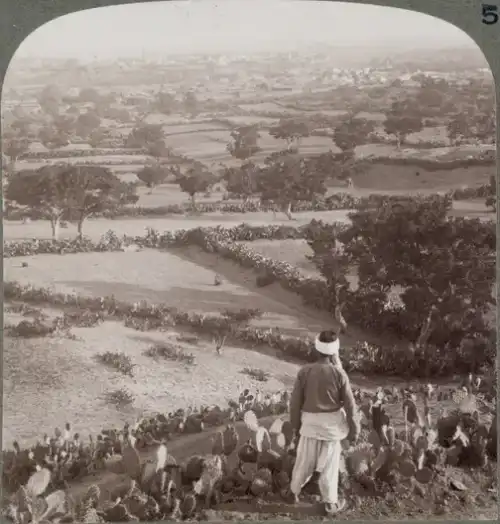
Featured photo via PublicDomainReview: Photographs of Palestinian life.
Earth.fm is a completely free streaming service of 1000+ nature sounds from around the world, offering natural soundscapes and guided meditations for people who wish to listen to nature, relax, and become more connected. Launched in 2022, Earth.fm is a non-profit and a 1% for the Planet Environmental Partner.
Check out our recordings of nature ambience from sound recordists and artists spanning the globe, our thematic playlists of immersive soundscapes and our Wind Is the Original Radio podcast.
You can join the Earth.fm family by signing up for our newsletter of weekly inspiration for your precious ears, or become a member to enjoy the extra Earth.fm features and goodies and support us on our mission.
Subscription fees contribute to growing our library of authentic nature sounds, research into topics like noise pollution and the connection between nature and mental wellbeing, as well as funding grants that support emerging nature sound recordists from underprivileged communities.

